Basic Witch
First Impression: Spooky-Sassy, Bold & Instantly Recognizable
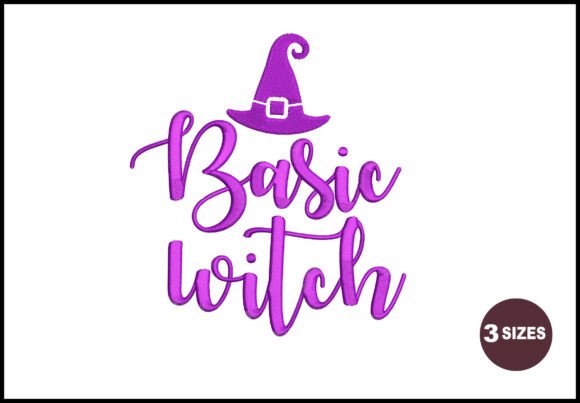
As an embroidery designer who’s prepped over 200 craft fair booths—and shipped thousands of embroidered handmade products—I opened the Basic Witch embroidery file with one question in mind: “Will this stop someone mid-aisle?” The answer is yes. It lands squarely in that sweet spot between playful and confident—bold script lettering gives it punch, while the implied witch hat (even without full illustration) adds whimsy and seasonal clarity. It’s not cutesy farmhouse, not gothic-elegant, not minimalist—it’s spooky-sassy: confident enough for a boutique apron, cheeky enough for a teen’s tote, and versatile enough to feel fresh across multiple product types.
Where Basic Witch Shines on Craft Fair Products
In my booth setup—featuring embroidered tote bags, tea towels, aprons, patches, fabric pouches, pillow covers, and small market bags—Basic Witch performs strongest where personality meets utility:
- Tote bag design: Centered on a natural canvas or black cotton tote, it reads clearly from 6 feet away. The bold script holds up beautifully at 4–5 inches wide—ideal for shoulder-height display.
- Apron embroidery: Positioned just above the pocket, it adds humor without overwhelming the garment’s function. Customers consistently pause longer at aprons with witty, legible phrases like Basic Witch.
- Embroidered patch: This is where Basic Witch becomes a repeat seller. Iron-on or sew-on patches let customers personalize jackets, bags, or denim—making it a low-risk, high-engagement impulse buy.
- Tea towel embroidery: Works best on lighter-weight linen-cotton blends. Avoid dense terry or heavily textured kitchen towels—the script can blur if stitch density fights fabric pile.
- Fabric pouch & pillow cover: At 3–4 inches wide, Basic Witch retains charm and readability. It feels intentional—not cramped—on these giftable handmade products.
What Holds It Back (And How to Fix It)
Basic Witch isn’t foolproof—and that’s why testing matters. Here’s what I watch for:
- Small lettering & tight curves: If the design includes fine interior details (like tiny stars or hat brim texture), those may vanish on dark fabric or at under-3-inch sizes. Always test on your target fabric first.
- Stitch density: Bold script often means heavier fill or satin columns. On thick fabrics (like duck canvas or heavy twill caps), excess density can cause puckering. Use medium-weight cutaway stabilizer—and consider simplifying inner loops if your machine struggles.
- Curved surfaces: Caps and curved market bags demand careful hooping. Basic Witch’s horizontal flow works better on front panels than crown seams. Skip the bill—it’s too narrow for clean script execution.
- Thread contrast: On charcoal, navy, or deep burgundy fabrics, default thread colors may fade. Swap to high-contrast options (e.g., bright white or metallic silver) to preserve sass.
Photography, Listings & Online Appeal
This design photographs exceptionally well—for both craft fair signage and Etsy listings. Why? Because Basic Witch is inherently shareable. It reads instantly in thumbnail size, supports clean printable mockups (no complex background needed), and pairs effortlessly with Halloween-themed lifestyle shots: a witchy mug beside an embroidered tea towel, or a patch pinned to a vintage denim jacket. As a digital embroidery file, it converts easily into social media assets—think Instagram carousels showing it on five different products. Bonus: its tone attracts repeat buyers. Customers who grab a Basic Witch patch often return for matching totes or aprons later in the season.
Booth Impact & Buyer Engagement
In real-time craft fair flow, Basic Witch drives conversation. It’s approachable—not intimidating like ornate monograms or obscure folklore motifs. Shoppers smile, say it aloud (“Oh! *Basic* Witch!”), and often tag friends. That verbal hook boosts memorability far more than intricate borders or seasonal clichés. On my booth table, I always place one finished product—like a black linen pouch with gold-thread Basic Witch—front-and-center. It acts as an anchor: simple, confident, and unmistakably handmade. When paired with complementary designs (e.g., “Pumpkin Spice & Everything Nice” or “Witch Please”), it strengthens brand consistency without feeling repetitive.
Practical Designer Notes Before You Stitch
Before cutting fabric or loading your hoop, run these checks:
- Test the Basic Witch embroidery file on scrap fabric matching your final product—especially for texture and weight.
- Verify thread contrast: hold swatches under your booth lighting and snap a quick phone photo. If it looks muddy on screen, it’ll look muddy in person.
- Review spacing and kerning—tight letters can merge on low-stabilization runs. Adjust tracking if needed, or choose a version with slightly open letterforms.
- Confirm hoop size compatibility. Most script-based machine embroidery designs like Basic Witch fit standard 4x4 or 5x7 hoops—but double-check before batching.
- Inspect stitch density visually in your embroidery software. If fill areas look solid black (not breathable satin), reduce density by 5–10% for better drape on apparel.
- Use appropriate stabilizer: cutaway for knits and stretchy fabrics; tear-away for stable wovens like quilting cotton or linen.
- Create at least one real mockup—not just a digital preview. A physical sample reveals how light hits the stitches, how fabric moves around the design, and whether it feels premium as a finished product.
- Compare fabric colors side-by-side. What reads “witchy black” on screen may be charcoal or espresso in reality—and that affects thread choice.
- Confirm commercial licensing status. If you’re selling finished products (not just the digital embroidery file), ensure your license permits small shop product and craft fair use.
Final Thought: A Reliable, Repeatable Halloween Workhorse
Basic Witch isn’t just another Halloween embroidery design—it’s a strategic craft fair asset. It balances humor and clarity, scales well across product categories, photographs cleanly for Etsy sellers and boutique makers, and invites interaction without demanding explanation. For embroidery business owners building a seasonal collection—or digital sellers expanding their design assets—it’s a low-risk, high-return addition. Just remember: its strength lies in execution, not just concept. Test, refine, and let that spooky-sassy energy shine through every stitch.