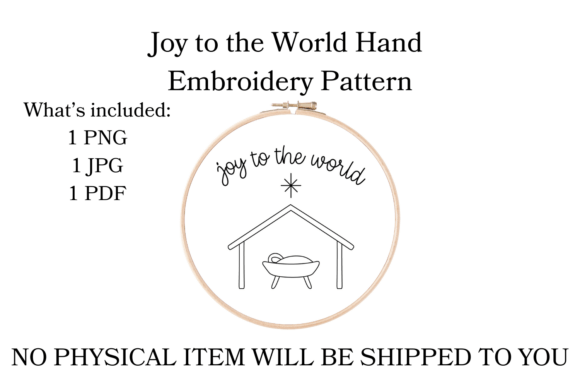
Joy to the World Hand Embroidery Pattern
First Impression: Minimalist, Meaningful, Market-Ready
As an embroidery designer who’s prepped over 200 craft fair booths—and shipped thousands of handmade products—I opened Joy to the World Hand Embroidery Pattern expecting charm, not clutter. What I found was exactly that: a clean, hand-drawn nativity line art design that feels reverent without being ornate, festive without being kitschy. It reads as modern-minimalist with quiet warmth—think farmhouse kitchen meets boutique gift shop. Not overly rustic, not aggressively elegant, and definitely not cartoonish. That balance is gold for craft fairs, where shoppers scan tables in under three seconds.
Where This Design Shines On Real Products
Tote bags: Perfect as a centered 4–5” hoop design on natural canvas or oatmeal linen. The line art stays crisp at that scale, and the nativity motif reads instantly—even from six feet away. No competing patterns needed.
Aprons and tea towel embroidery: Ideal for upper-left corner placement (3–4” wide). The simplicity prevents visual fatigue in busy kitchen displays. Customers consistently pause longer at aprons with meaningful, non-generic embroidery—and Joy to the World Hand Embroidery Pattern delivers that emotional resonance.
Embroidered patches and fabric pouches: Works beautifully scaled down to 2.5”. The open-line structure avoids fill-stitch mushiness, so it holds shape on lightweight twill or cotton poplin. Great for holiday gift sets—pair with matching stitch kits or mini hoops.
Pillow covers and small market bags: At 5–6”, it becomes a quiet focal point—not loud, but deeply intentional. Especially strong on textured oat or unbleached cotton, where the hand-drawn quality echoes the fabric’s organic feel.
Caps and curved surfaces: Use caution. The delicate lines and subtle spacing between figures may distort on high-crown caps unless digitized carefully. Recommend testing on scrap first—or reserving this design for flat-panel items like visors or embroidered patches sewn onto caps.
What Makes It Sell—Beyond the Stitch
This isn’t just another Christmas embroidery file—it’s a story anchor. At craft fairs, buyers don’t just choose technique; they choose meaning. “Joy to the World” signals intentionality. It draws in faith-based shoppers, educators, liturgical creatives, and those seeking alternatives to Santa-centric decor. That niche clarity boosts perceived value—and justifies premium pricing for your handmade product.
For Etsy sellers and digital designers, the minimalist line art translates cleanly into printable mockups. It photographs well on neutral backdrops, requires minimal retouching, and scales reliably across listing thumbnails, banners, and social previews. As a digital embroidery file, it’s highly reusable: same core asset, multiple product applications—no need to license new designs per item.
Production Reality Checks: Know Before You Hoop
Before batch-producing, run these checks:
- Test on scrap fabric—especially if using textured tea towels or thick denim tote bags. Line weight must remain legible after stitching.
- Confirm thread contrast. Light-colored threads (ecru, ivory, soft sage) pop on dark fabrics—but avoid pale yellow or peach on cream linen; they’ll disappear.
- Review spacing and stitch density. Though labeled “simple line art,” some nativity elements (like bundled hay or star rays) may cluster tightly. Zoom in: are any lines under 1mm apart? If yes, adjust spacing for stability on low-thread-count fabrics.
- Verify hoop size compatibility. Since the description references a “hoop design,” assume standard 4”, 5”, or 6” round framing—but always confirm actual dimensions before cutting fabric or setting up machine embroidery.
- Use appropriate stabilizer. For tea towels or loose-weave linens, medium-weight cutaway prevents puckering. For lightweight pouches, tear-away works—but test first.
Careful-Use Notes for Craft Fair Sellers
Avoid applying Joy to the World Hand Embroidery Pattern to:
- Dark fabrics without high-contrast thread (e.g., navy + charcoal gray = lost detail)
- Highly textured terry cloth or heavy burlap—fine lines won’t resolve clearly
- Small-format items under 2” (e.g., keychain tags)—lettering and figure separation will blur
- Products requiring dense fill stitches—this is line art, not a filled graphic. Don’t force shading or gradients.
Why It Strengthens Your Booth & Brand
In a sea of glittery snowmen and candy cane stripes, Joy to the World Hand Embroidery Pattern stands out by standing still. It invites slower looking. It pairs seamlessly with other handmade products in your line—whether you’re selling botanical-print tea towels or ceramic mugs—because its tone is cohesive, calm, and confident. It reinforces brand consistency for small shop owners who curate meaning alongside materials.
At the booth, one real embroidered sample—say, a linen apron with this design in soft oat thread—often sparks deeper conversation than ten flashier pieces. Buyers ask about the story behind it. They touch the stitch texture. They linger. That’s engagement you can’t fake—and it converts.
Final Designer Recommendation
If you sell craft fair products, run an Etsy shop, or create commercial embroidery for boutiques, Joy to the World Hand Embroidery Pattern is a strategic asset—not just seasonal decor. It’s versatile enough for machine embroidery design workflows, thoughtful enough for hand-stitched collections, and refined enough to elevate even simple tote bag designs. Just remember: simplicity demands precision. Check every detail before cutting, stabilize intentionally, and always confirm commercial licensing terms before selling finished products. When executed well, this Graphics-class design becomes more than decoration—it becomes a quiet invitation to pause, reflect, and celebrate what matters.