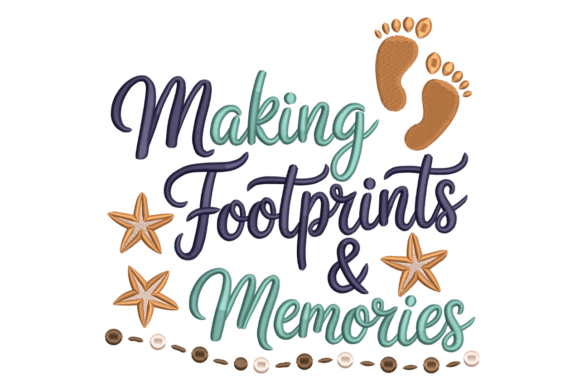
Making Footprints Memories
A Thoughtful Embroidery Design Review for Small Business Merchandise
As an embroidery designer who’s digitized and stitched thousands of designs for small businesses—from coastal boutiques and baby boutiques to artisan bakeries and pet brands—I approached Making Footprints Memories with both curiosity and practical intent. The title alone evokes warmth, nostalgia, and a gentle sense of place—ideal for brands rooted in memory, care, or coastal charm. Based on the description—“Capture the magic of your seaside adventures with this heartwarming Making Footprints Memories machine embroidery design. This nostalgic file features elegant script typography in calming navy and seaf…”—my first impression is one of quiet elegance: soft but intentional, handmade but polished, sentimental without being saccharine.
How It Performs Across Real Business Applications
Making Footprints Memories shines where authenticity and emotional resonance matter most. As an embroidered patch, it reads beautifully on denim tote bags, linen aprons, and canvas market sacks—especially for nurseries, seaside gift shops, or handmade baby product lines. Its script-based structure lends itself naturally to chest placement on staff uniforms, sleeve accents on café aprons, or subtle cap embroidery (think left side of a relaxed-fit dad cap). For boutique merchandise, it adds narrative weight: a single stitch of “Making Footprints Memories” on a muslin drawstring bag transforms functional packaging into a keepsake.
On custom apparel like unisex tees or organic cotton onesies, the design anchors a cohesive brand story—particularly when paired with complementary motifs (a minimalist wave, a tiny shell, or bare footprints). As a digital embroidery file, it supports scalable storytelling: use it full-size on a large tote, reduce it thoughtfully for a lapel patch on a floral shop’s delivery jacket, or mirror it as a dual-sided label on handmade soap wraps.
For Etsy sellers and craft-based small businesses, Making Footprints Memories works exceptionally well in printable mockups—its clean script translates clearly across digital previews, helping buyers visualize the finished product before purchase. And because it’s rooted in the Nursery category yet emotionally broad, it bridges audiences: new parents, coastal lifestyle brands, wellness studios, even eco-conscious pet brands celebrating life’s small, tender milestones.
Where to Use It With Intention—and Caution
This design isn’t built for high-contrast boldness or aggressive branding—it’s poetic, not promotional. That means thoughtful placement is essential. Avoid cramming Making Footprints Memories onto patches smaller than 2.5 inches wide; delicate script lettering risks blurring or thread nesting at tight scales. Cap fronts demand special attention: test stitch density on curved surfaces and confirm legibility at reduced sizes—navy-on-navy won’t read, and fine script can vanish on textured twill.
Also consider fabric texture and laundering frequency. On heavy-duty work shirts or aprons that endure daily washing, ensure proper stabilizer backing and balanced stitch density—too many overlapping satin stitches in the curves may pucker or wear unevenly over time. Dark uniforms require high-contrast thread colors; if navy is the base, opt for ecru, oatmeal, or pale seafoam—not black—to preserve its calming tone while ensuring visibility.
Strengthening Brand Identity Through Embroidered Storytelling
In a crowded marketplace, customers don’t just buy products—they connect with meaning. Making Footprints Memories does more than decorate; it invites recognition and trust. When stitched onto a bakery’s flour-dusted apron or a florist’s reusable bouquet wrap, it signals intentionality: this isn’t mass-produced. It’s curated. Handmade. Human. That perception elevates perceived value—especially for premium small business merch, limited-edition releases, or customer thank-you gifts.
Consistency matters too. If you’re building a suite of design assets—logo, social graphics, packaging, and embroidery files—Making Footprints Memories should complement, not compete with, your primary mark. Does its rhythm match your brand voice? Is its elegance aligned with your visual palette? Use it alongside other script-based elements or balance it with clean sans-serif accents to maintain hierarchy and clarity.
Practical Designer Notes Before You Stitch
Before committing to production, run these checks:
- Test in black and white first. Confirm readability and flow without color bias.
- Verify small-patch viability. Resize to 2.25” and stitch a sample—check spacing between letters and curve integrity.
- Review thread color contrast. Navy script needs light-to-mid tone backgrounds for optimal impact.
- Inspect kerning and spacing. Tight lettering can cause thread buildup—ensure consistent air gaps in the original embroidery file.
- Confirm hoop size compatibility. Script designs often span wider than tall—verify fit in your standard hoops.
- Test on real fabric. Linen, canvas, and midweight cotton behave differently—don’t rely solely on stabilizer specs.
- Use appropriate stabilizer. Tear-away works for stable fabrics; cut-away adds longevity for high-wash items like aprons or kids’ wear.
- Create a client-approved mockup. A printable mockup or stitched photo helps align expectations before bulk production.
- Compare beside other design assets. Does Making Footprints Memories harmonize with your logo, icons, or secondary typography?
- Confirm commercial licensing. Since this is intended for small business merch and embroidered patch use, verify the digital embroidery file includes rights for resale and commercial embroidery.
Finally, remember this: Making Footprints Memories isn’t just another embroidery file. It’s a narrative tool—a quiet, confident way to say, “We honor what lasts.” Whether stitched on a nursery onesie, a seaside café’s tote, or a handmade candle’s hang tag, it reminds customers—and your team—that every small business leaves a mark. Make yours memorable.