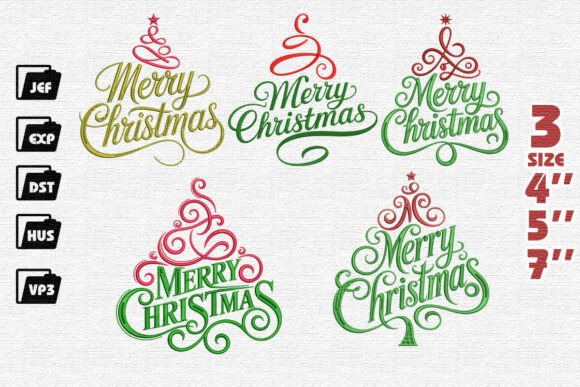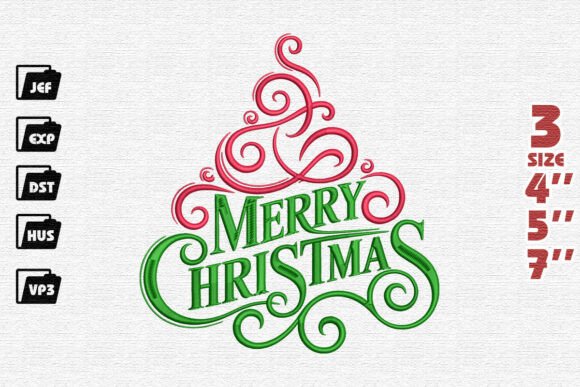
Merry Christmas Text
First Impression: Cheerful, Classic, and Instantly Recognizable
As an embroidery designer who’s prepped over 200 craft fair booths—and shipped thousands of finished products—I opened Merry Christmas Text expecting something warm but not overly ornate. What I got was exactly that: a clean, joyful script with clear holiday intention. The description calls it “Holly Merry Christmas Classic Script,” and that’s accurate—it leans into timeless elegance without leaning too far into vintage or cursive complexity. It doesn’t scream “funny” or “minimalist.” It says “festive,” “handmade with care,” and “ready for gifting.” That’s gold at a craft fair.
Where It Shines on Real Craft Fair Products
This isn’t just another digital embroidery file—it’s a versatile craft fair product engine. On a natural canvas tote bag? Perfect center-chest placement reads clearly from six feet away. On a linen apron? It anchors the chest pocket beautifully—elegant but approachable. For tea towel embroidery, it works best centered near the top hem—not too small, not overwhelming the fabric’s texture. And on a cotton twill cap? Yes, but only if you keep it scaled to fit comfortably across the front panel—no stretching or distortion.
Embroidered patch potential is strong here: stitch it cleanly on twill-backed iron-on backing, and you’ve got instant merch for holiday markets. Small fabric pouches? Ideal for a subtle lower-corner placement—adds value without competing with hand-stitched details. Pillow covers love this design when stitched in crisp white thread on charcoal or cream linen—it reads as premium, not generic. Even as a small shop product on handmade market bags or gift tags, Merry Christmas Text delivers immediate seasonal clarity.
What Makes It Sell—And What Requires Caution
Customers at craft fairs don’t pause to read fine print. They scan. They feel. They connect. Merry Christmas Text passes the “glance test”: bold enough to catch eyes in a crowded booth, soft enough in line weight to avoid looking harsh or machine-made. Its script flow feels human—not robotic—so it supports the “handmade quality” story every boutique maker needs.
But caution points matter. This is a machine embroidery design built for readability, not micro-detail. Tiny lettering won’t hold up on textured towels or thick terry cloth—stitch density can blur edges. On dark fabric, contrast is non-negotiable: recommend high-contrast thread colors (ivory on navy, red on cream) and always test before batching. Curved surfaces like caps need careful hooping and stabilizer selection—don’t skip cutaway backing here.
Photography & Online Appeal
For Etsy sellers and digital sellers, Merry Christmas Text photographs exceptionally well. Its balanced spacing and smooth curves translate cleanly to printable mockups. No jagged edges. No overlapping letters. That means your listing images look polished—even on mobile. Bonus: it scales predictably. A 4-inch version looks intentional next to a 6-inch version. That consistency builds brand trust across listings, social posts, and printed signage.
Production Reality Check for Embroidery Business Owners
If you’re batch-producing for holiday markets, Merry Christmas Text is a smart pick—but only if you treat it like a real product, not just a file. Here’s what I do before cutting a single piece of fabric:
- Test the embroidery file on scrap fabric matching your final product (e.g., flour-sack towel vs. duck canvas)—fabric texture changes everything.
- Check thread contrast under booth lighting—not just studio LEDs. What looks bright on screen may vanish under tent lights.
- Review letter spacing and kerning. Tight loops in “R” and “S” can trap lint or distort on low-tension machines.
- Confirm hoop size compatibility. If it requires a 6x10 hoop but your main machine uses 5x7, adjust or skip.
- Inspect stitch density in curved areas. Overly dense fills heat up fabric and risk puckering—especially on lightweight cotton.
- Use the right stabilizer: tear-away for stable wovens, cutaway for knits or stretchy blends, and heavy cutaway for towels.
- Create at least one real mockup—not just a digital preview. Hold it. Drape it. See how light hits the thread.
- Compare fabric colors side-by-side. Ivory thread on oatmeal linen reads warmer than on ivory cotton—subtle, but meaningful for cohesive booth displays.
- Verify commercial licensing status before selling any finished product. If unclear, reach out to the designer—never assume.
Booth Impact & Buyer Engagement
In my experience, Merry Christmas Text strengthens booth cohesion more than most holiday designs. It doesn’t fight other patterns—it complements them. Pair it with simple holly sprigs or minimalist trees, and your table feels curated, not cluttered. Buyers notice it first on tote bags and aprons—the items they touch, carry, and photograph. That tactile connection boosts perceived value: this isn’t mass-produced; it’s chosen, stitched, and offered with intention.
It also invites engagement. “Oh, I need that for my kitchen!” or “My mom would love this on her gardening apron”—those are the comments that turn browsers into buyers. Because Merry Christmas Text feels personal, not promotional. It fits seamlessly into handmade storytelling, whether you’re an Etsy seller building a holiday collection or a local boutique maker launching limited-edition gifts.
Final Thought: A Reliable, Repeatable Holiday Workhorse
This isn’t a trend-chasing design. It’s a commercial embroidery staple—one that performs across categories, scales well, photographs cleanly, and supports both online and in-person sales. It won’t win awards for avant-garde innovation, but it will sell consistently across tote bags, tea towels, patches, and pillow covers. For craft fair sellers juggling time, thread, and attention spans, Merry Christmas Text is less “nice to have” and more “must-stock.” Just remember: respect the fabric, honor the thread, test early, and always let the handmade quality speak louder than the machine.